- Hypatia of Alexandria (c. 350–415 AD) – The First Female Mathematician and Philosopher
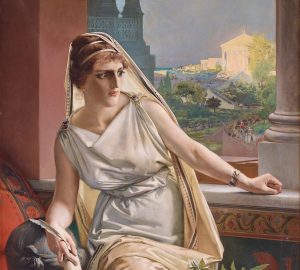 One of the first recorded female scholars in history, Hypatia was a mathematician, astronomer, and philosopher who led the famous Neoplatonist school in Alexandria. She preserved and expanded on Greek and Roman scientific knowledge, writing commentaries on Euclid’s Elements and Ptolemy’s Almagest.
Beyond academia, Hypatia advocated for intellectual freedom, lecturing on philosophy and science at a time when women were largely excluded from scholarly work. Her inventions, including an improved astrolabe and hydrometer, were centuries ahead of her time. Tragically, her life was cut short when she was brutally murdered by a political mob, but her legacy as a symbol of rational thought and free inquiry endures.
Quote: “Reserve your right to think, for even to think wrongly is better than not to think at all.”
📖 Read: Hypatia of Alexandria by Maria Dzielska
🎬 Watch: Agora (2009)
2. Sor Juana Inés de la Cruz (1648–1695) – A Voice for Knowledge and Equality
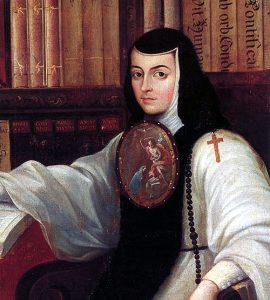 Juana Inés de la Cruz was a self-taught scholar, poet, and playwright who defied societal norms by championing women’s education in colonial Mexico. Fluent in Latin, Spanish, and Nahuatl, she translated and analyzed classical works, becoming a key figure in the Spanish Golden Age of literature. She once disguised herself as a man to attend university lectures before joining a convent to continue her studies. Her groundbreaking work Respuesta a Sor Filotea fiercely defended women’s right to intellectual freedom.
Quote: “I do not study to know more, but to ignore less.”
🎬 Watch: I, the Worst of All (1990)
3. Sacagawea (c. 1788–1812) – Bridging Cultures Through Language
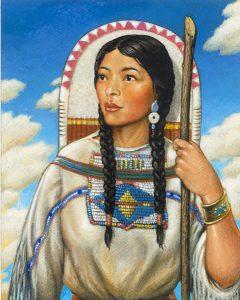 A Lemhi Shoshone woman, Sacagawea played an essential role as an interpreter and guide for the Lewis and Clark Expedition. Fluent in Shoshone and Hidatsa, she negotiated peace between Native tribes and European explorers, ensuring safe passage and cultural exchange.
Despite being only a teenager and traveling with an infant, Sacagawea’s navigation skills, resilience, and linguistic expertise helped the expedition find food, avoid conflicts, and establish relationships with Indigenous nations. Honored with statues, landmarks, and a U.S. dollar coin, she remains a symbol of strength, diplomacy, and Indigenous knowledge.
📖 Read: The Truth About Sacajawea by Kenneth Thomasma
🎬 Watch: Lewis & Clark: Great Journey West (2002)
4. Ada Lovelace (1815–1852) – The First Computer Programmer
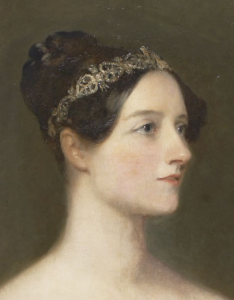 Ada Lovelace, the world’s first computer programmer, envisioned a machine that could process not just numbers but also language and music. Collaborating with Charles Babbage on the Analytical Engine, she wrote the first algorithm designed for a machine, predicting the rise of artificial intelligence. The daughter of poet Lord Byron and mathematician Annabella Milbanke, she received an uncommon mathematical education for a woman of her time. In 1980, the U.S. Department of Defense honored her legacy by naming its programming language “Ada.”
📖 Read: Ada Lovelace: The Making of a Computer Scientist by Christopher Hollings
5. Ida B. Wells (1862–1931) – Journalist and Free Speech Advocate
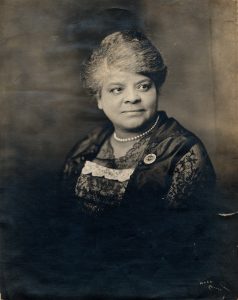 One of the most fearless investigative journalists in American history, Ida B. Wells exposed racial violence and led the anti-lynching movement, even in the face of death threats. As co-owner and editor of The Memphis Free Speech, she used her platform to fight for justice, civil rights, and women’s suffrage.
Wells co-founded the NAACP (National Association for the Advancement of Colored People), became one of the first Black women to run for public office, and documented the realities of racial terrorism in the U.S. Her work not only paved the way for modern investigative journalism but also amplified the power of the written word in social activism.
Quote: “The way to right wrongs is to turn the light of truth upon them.”
📖 Read: Ida: A Sword Among Lions by Paula Giddings
6. Nellie Bly (1864–1922) – Investigative Journalism Trailblazer
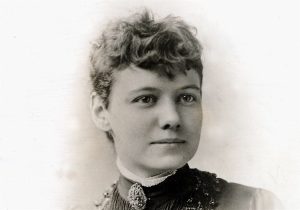 A pioneer of undercover journalism, Nellie Bly infiltrated a mental asylum by faking insanity at just 23 years old. Her shocking exposé, Ten Days in a Mad-House, led to sweeping mental health reforms.
Beyond journalism, Bly circumnavigated the globe in 72 days, breaking records and proving that women belonged in adventure, media, and investigative reporting.
Quote: “Energy rightly applied and directed will accomplish anything.”
🎬 Watch: Escaping the Madhouse: The Nellie Bly Story (2019)
7. Anne Sullivan (1866–1936) – The Teacher Behind the Miracle
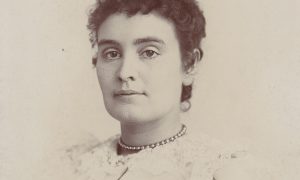 Anne Sullivan, the brilliant educator behind Helen Keller’s success, revolutionized teaching methods for deaf-blind individuals, proving that communication could break any barrier. Her own struggles shaped her mission—partially blind from childhood due to trachoma, she entered the Perkins School for the Blind, where she overcame illiteracy and honed her skills. With relentless patience and innovation, she taught Keller language through tactile signing, leading to one of the most remarkable breakthroughs in education history. Sullivan remained Keller’s lifelong companion and advocate, ensuring that disability never meant inability.
Quote: “Children require guidance and sympathy far more than instruction.”
📖 Read: Teacher: Anne Sullivan Macy by Helen Keller
🎬 Watch: The Miracle Worker (1962 & 2000)
8. Marie Curie (1867–1934) – Breaking Barriers in Scientific Communication
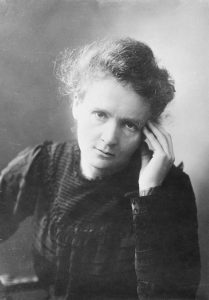 Marie Curie didn’t just redefine science—she revolutionized how knowledge is shared. The first woman to win a Nobel Prize and the only person to win in two different sciences, she broke barriers in physics and chemistry. Fluent in Polish, Russian, French, German, and English, she navigated international academia with ease, proving that intellect knows no borders. Her discoveries in radioactivity not only advanced medicine but also laid the foundation for modern physics, securing her legacy as one of history’s greatest scientific minds.
Quote: “Nothing in life is to be feared, it is only to be understood.”
📖 Read: Madame Curie by Ève Curie
🎬 Watch: Radioactive (2020)
9. Helen Keller (1880–1968) – Redefining Communication for the Deaf-Blind Community
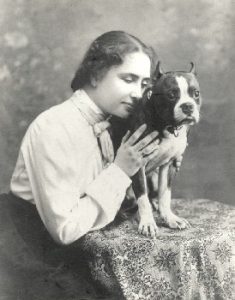 Helen Keller shattered barriers as the first deaf-blind person to earn a college degree, proving that communication knows no limits. With Anne Sullivan’s guidance, she mastered Braille, tactile sign language, and speech reading, revolutionizing accessibility. A fearless advocate, she championed Braille literacy, disability rights, and inclusive education, ensuring the world recognized the power of accessibility and equal opportunity. Her legacy continues to inspire generations.
📖 Read: The Story of My Life by Helen Keller
🎬 Watch: The Miracle Worker (1962 & 2000)
10. Kató Lomb (1909–2003) – A Pioneer in Interpretation
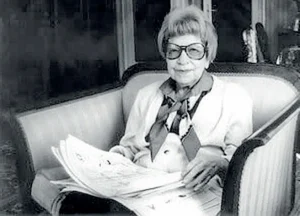 A Hungarian polyglot and one of the first simultaneous interpreters, Kató Lomb mastered 16 languages through self-study, using newspapers, books, and radio broadcasts long before modern language-learning tools existed: Bulgarian, Chinese, Danish, English, French, German, Hebrew, Italian, Japanese, Latin, Polish, Romanian, Russian, Slovak, Spanish, and Ukrainian.
Despite having no formal language training, she became a globally sought-after interpreter, translator, and educator, proving that motivation and exposure are key to mastering languages. Fluent in both written and spoken forms, she worked for diplomatic missions, conferences, and international organizations, adapting effortlessly across cultures.
Quote: “Language is the only thing worth knowing even poorly.”
📖 Read: Polyglot: How I Learn Languages by Kató Lomb
11. Hedy Lamarr (1914–2000) – Inventor of Frequency-Hopping Technology
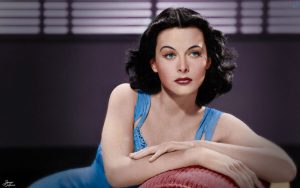 More than just a Hollywood star, Hedy Lamarr was a brilliant inventor whose work revolutionized modern communication. In 1941, during World War II, she co-invented frequency-hopping spread spectrum technology that later became the foundation for Wi-Fi, Bluetooth, GPS, and secure military communications.
Despite her scientific brilliance, Lamarr was dismissed as just a glamorous actress during her lifetime, and her invention went largely uncredited until decades later. Today, she is celebrated as a trailblazer in both Hollywood and technology. Her life’s story highlights the overlooked genius of women in STEM and how innovation can emerge from unexpected places.
Quote: “Try everything. Join everything. Meet everybody. That’s the secret of life”.
🎬 Watch: Bombshell: The Hedy Lamarr Story (2017)
- Patsy Mink (1927–2002) – Champion of Equal Education and Title IX
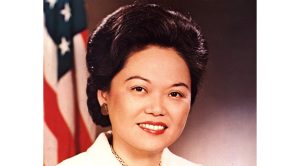 Patsy Mink shattered racial and gender barriers as the first woman of color elected to the U.S. Congress and the co-author of Title IX, which prohibited gender-based discrimination in education.
Facing racism and sexism, she was rejected from medical schools and instead pursued law, becoming a relentless advocate for equal access to education, bilingual programs, and women’s rights. Her legacy is in every classroom, university, and sports program where girls now have equal opportunities.
Quote: “I can’t change the past. But I can certainly help somebody else in the future, so they don’t have to go through what I did.”
📖 Read: Fierce and Fearless: Patsy Takemoto Mink, First Woman of Color in Congress by Judy Tzu-Chun Wu
🎬 Watch: Ahead of the Majority (2009)
13. Maya Angelou (1928–2014) – Poet, Writer, and Civil Rights Activist
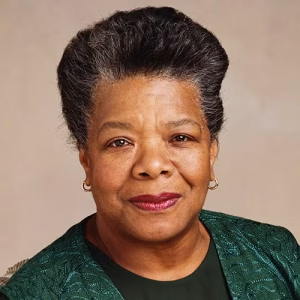 Maya Angelou was a literary icon, poet, and civil rights activist who used her powerful voice to advocate for social justice. A master of spoken word, Angelou won three Grammy Awards for her poetry recordings. In 1993, she made history again as the first female inaugural poet in the U.S., delivering On the Pulse of Morning at President Bill Clinton’s swearing-in.
Throughout her career, Angelou worked alongside Dr. Martin Luther King Jr. and Malcolm X, lending her voice to the fight for equality. Her legacy as a writer, performer, and activist continues to inspire generations.
Quote: “Words mean more than what is set down on paper. It takes the human voice to infuse them with deeper meaning.”
📖 Read: I Know Why the Caged Bird Sings by Maya Angelou
🎬 Watch: Maya Angelou: And Still I Rise (2016)
14. Nawal El Saadawi (1931–2021) – The Voice of Feminism and Free Thought in the Arab World
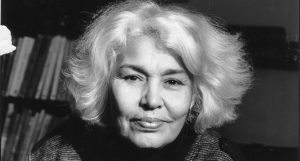 Nawal El Saadawi was an Egyptian writer, physician, and activist whose fearless advocacy and groundbreaking literature challenged gender inequality, colonialism, and religious fundamentalism. Despite facing censorship, imprisonment, and exile, she remained an unyielding voice for women’s rights and social justice. She was often called “the Simone de Beauvoir of the Arab World” and hailed as “Egypt’s most radical woman” for her relentless fight against patriarchal norms. A trained doctor, El Saadawi also tackled issues of female health, violence, and oppression. Her legacy continues to inspire those who dare to challenge injustice.
Quote: “You are not free if your mind is not free.”
📖 Read: Woman at Point Zero by Nawal El Saadawi
15. Ruth Bader Ginsburg (1933–2020) – Legal Language and Gender Equality
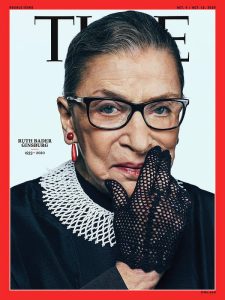 Ruth Ginsburg was a trailblazing Supreme Court Justice who redefined gender equality in American law. With meticulous legal arguments, she dismantled gender discrimination, ensuring that laws and court rulings treated it with the same scrutiny as racial discrimination.
She co-founded the Women’s Rights Project at the ACLU, arguing landmark cases that established equal protections for men and women under the law, and became a cultural icon, known as “The Notorious RBG”, inspiring generations with her unwavering commitment to justice.
Her dissents became legendary, often shaping future legal interpretations and reinforcing her legacy as a champion of civil rights, gender equality, and justice for all.
Quote: “Women belong in all places where decisions are being made.”
📖 Read: My Own Words by Ruth Bader Ginsburg
🎬 Watch: RBG (2018) and On the Basis of Sex (2018)
16. Ruby Bridges (b. 1954) – A Symbol of Educational Integration
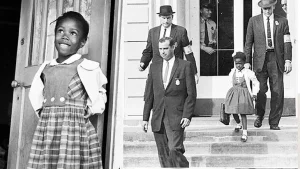 At just six years old, Ruby Bridges became the first Black child to integrate an all-white school in the South, facing relentless hostility with extraordinary courage. Escorted by federal marshals, she walked through angry mobs daily, determined to claim her right to education. Her bravery in 1960 became a defining moment in the Civil Rights Movement, forcing the nation to confront the deep injustices of segregation. Today, as an activist, she advocates for racial justice, childhood education, and a more inclusive future.
Quote: “Don’t follow the path. Go where there is no path and begin the trail.”
📖 Book: Through My Eyes by Ruby Bridges
🎬 Movie: Ruby Bridges (1998)
17. Malala Yousafzai (b. 1997) – A Global Champion for Girls’ Education
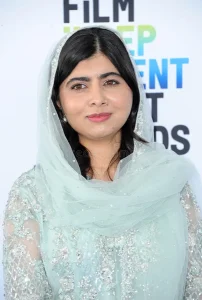 Malala Yousafzai defied the Taliban’s oppressive rule in Pakistan, fighting for girls’ right to education despite life-threatening risks. At just 15 years old, she survived a brutal assassination attempt, which only strengthened her resolve to advocate for universal education.
At 17, she became the youngest-ever Nobel Peace Prize laureate, proving that a single voice can ignite global movements. Through the Malala Fund, she continues to champion education, language access, and gender equality, ensuring that all children—regardless of gender or geography—can learn and thrive.
Quote: “One child, one teacher, one book, and one pen can change the world.”
📖 Read: I Am Malala by Malala Yousafzai
🎬 Watch: He Named Me Malala (2015)