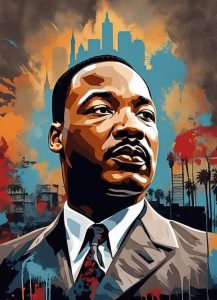
Every third Monday in January, we pause to honor the legacy of Dr. Martin Luther King Jr., a man whose words changed the course of history. His speeches weren’t just words—they were calls to action, sparks of hope, and bridges for understanding. Dr. King knew how to wield language to connect, inspire, and push for a better world.
It’s a powerful reminder of something we, as language professionals, know all too well: words have weight, and the right ones can change everything.
The Power of Words in Action
Dr. King didn’t just talk — he spoke. He chose every word with care, crafting messages that resonated deeply with people from all walks of life. Whether he was standing at a pulpit, marching in Selma, or delivering his iconic “I Have a Dream” speech on the steps of the Lincoln Memorial, his words transcended barriers. They weren’t just for the people standing in front of him; they reached across divides rooted in racism, class, and geography.
For interpreters and translators, this is familiar ground. Every day, we work to bridge communication gaps, creating understanding between people who might otherwise struggle to connect. Our work may not always make headlines, but whether it’s in hospitals, courtrooms, classrooms, refugee camps, or translating critical documents, language professionals are using the power of words to empower marginalized communities similar to the way Dr. King did.
More Than a Warm Body
It’s easy to think of language as just a tool — a way to “get the point across.” But as Dr. King showed us, the right words matter. They can heal or harm, build or break. This is why trained and qualified interpreters and translators are so critical.
Think of a patient in a hospital, scared and unsure, trying to navigate a health crisis in a language they don’t fully understand. Or a parent in an IEP meeting, advocating for their child’s needs but unable to grasp the nuances of the conversation. Or a refugee seeking asylum, whose story hinges on precise details in their documents.
In each of these scenarios, the language professional is not just there to repeat or transcribe words — they are to carry the full weight of meaning, intent, and emotion. A missed nuance, a mistranslated term, or a cultural misunderstanding can have life-altering consequences.
Qualified interpreters and translators understand this responsibility. They’re not just warm bodies filling a space; they’re highly skilled professionals who know that words have power. They know how to navigate cultural contexts, maintain accuracy, and ensure that every voice is heard clearly and respectfully.
Inspiring Change Through Language
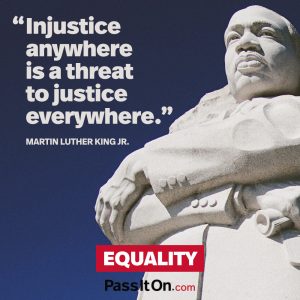
Dr. King famously said, “Injustice anywhere is a threat to justice everywhere.” It’s a call that resonates deeply with language professionals, whose work often brings them face-to-face with marginalized communities fighting for the rights of all.
Translators ensure that essential documents — medical forms, legal papers, educational materials — are accessible to those who need them. Interpreters empower individuals to speak and be heard in spaces where their voices might otherwise be ignored. Together, we ensure that justice is served, dignity is upheld, and no one is left behind simply because they speak a different language.
Continuing the Legacy
As we honor Dr. King’s legacy this MLK Day, let’s reflect on the power of language to inspire change and build bridges. Whether you’re an interpreter, a translator, or a language advocate, your work is part of this legacy. You are the voice of those who need it most.
So, as you head into the week, remember this: the words you choose, the skills you bring, and the care you put into your work matter. They make a difference in people’s lives, similar to the way Dr. King’s words did so many years ago.
Because in the end, words are never just words. They’re the tools we use to build a better, more just world.
Here’s to the power of words — and the people who know how to use them.
Happy MLK Day from all of us at LEO.
