Self-Care Isn’t Selfish: Why Interpreter Wellness Is Essential for Career Longevity
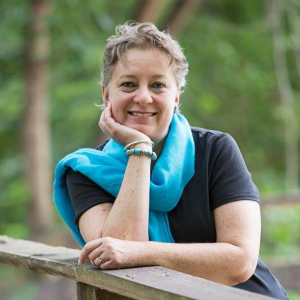 What happens when caregivers forget to care for themselves? In this Q&A, Cynthia Mauleón — interpreter, trainer, writer, and healing practitioner — opens up about burnout, boundaries, and why self-care must be non-negotiable in our profession. Drawing from her 30+ years in the field and her experience with alternative healing, Cynthia offers personal insights and practical strategies for maintaining emotional balance, recovering from vicarious trauma, and protecting your energy. Her upcoming session at LEO11 will help interpreters turn self-care from an afterthought into a professional necessity.
Q: You’ve worked in high-stakes, emotionally charged settings throughout your career, from disaster response to trauma hospitals. What personal turning point made you realize that self-care had to become non-negotiable?
A: My turning point was my own experience of burnout. I was forced to take a medical leave from my job. After a month of reflection, I stepped down from my supervisory role and converted to on-call status, eventually transitioning out of that job altogether. It took me at least two years to fully recover.
Q: Many interpreters struggle with setting boundaries in both their professional and personal lives. What strategies have helped you maintain emotional balance while staying connected to the work?
A: For me, this is an ongoing process. I can’t say I’ve found the right balance yet. I think at the most basic level, it has to do with learning to become fully embodied and present to myself, to remember to tune in to my own sensations and emotions as keys to how I’m doing and as reminders that it’s time to pull back in for some self-care. Learning about boundaries has been helpful too. That they exist. That I have a right to them and to care for myself first.
Q: Your background includes healing practices and intuitive work. How have those informed your approach to interpreter wellness and resilience?
A: What an interesting question. I think, for me, the process went in the opposite direction. After interpreting for literally thousands of medical appointments over the years, I have seen firsthand both the benefits and limitations of Western medicine. One of the things I’ve learned is that support from our loved ones makes a tremendous difference in our ability to heal. I have also observed how unresolved emotional issues often manifest as physical ailments that Western medicine is hard-pressed to treat. Those observations, along with my exposure to healing practices from other cultures, led me to study alternative healing methods. And now, coming full circle, I can see how these healing modalities can serve the profession I so love.
Q: What do you see as the most overlooked aspect of interpreter self-care, and why do you think it’s so hard for professionals in our field to prioritize it?
A: I think what lies at the heart of the issue is the conflict that exists around taking care of ourselves at all, much less first, which we often interpret as being at the expense of others. Many of us in this profession are women who have been socialized to care for others at all costs. Many of us carry traumatic experiences that shape our behavior and approach so that we become compulsive caregivers. Many of us wouldn’t know a boundary if it jumped out and bit us. And then, for those of us in the US, there’s also the overarching cultural construct of rugged individualism, of competition, professional aspirations, etc. that contribute to a culture of unhealthy overwork. It’s not uncommon for people to be proud of how hard they are pushing themselves. We are strong. We are capable. And we are resilient. But our resilience is not limitless.
Q: Many of us turn to physical activity like yoga, sports, or walking, to manage stress. Do you have a favorite form of movement that supports your own well-being, and how do you incorporate it into your routine?
A: I have been practicing yoga for about a decade and find that to be very beneficial. That said, my practice really took a hit during COVID. I also enjoy walking and spending time in nature. I have moved several times over the last decade, which has been disruptive to routine of any kind, and I find I am constantly re-inventing myself and trying to figure out my new balance point.
Q: What is your favorite book or movie?
A: I am an avid reader, and I love the cinema, so there are way too many favorites to name. I believe that both reading, and movies can have therapeutic value, in addition to being relaxing and entertaining. As far as reading goes, I tend to read non-fiction in the mornings. Reading is my favorite way to learn. I read fiction at night to unwind. I often read YA (young adult) books. I’m also a writer. I blog at www.reluctantmethodistmystic.com and am working on memoir. As far as movies, I enjoy many kinds, especially foreign films and comedies.
Q: Favorite dish?
A: Usually, something I haven’t tried before. I tend to be an adventurous eater. But when I need comfort food, a quesadilla or mac and cheese might do the trick.
Q: Favorite place in the world?
A: Outdoors. The beach, the forest, the mountains, the plains.
Q: Your session at LEO11, “Interpreter Self-Care: The Key to Long-Term Survival in a Helping Profession,” touches on burnout and vicarious trauma. What are one or two practical tools attendees will walk away with?
A: We’ll spend some time talking about meditation, what it is at its most basic, and how to incorporate a meditation practice into our work as interpreters. My intention is also to spend some time creating our own self-care plan, so folks will walk away with actionable steps they can implement right away.