 Majd wears many hats — freelance interpreter, entrepreneur, mother of three, and memory coach. After launching her company Glory Language Services in 2023, Majd turned personal adversity into an opportunity to grow, diving deep into memory techniques and how they can empower interpreters in high-pressure settings. In this Q&A, she shares how interpreters can prepare for healthcare and education challenges, the importance of trauma-informed practice, and why now is the time to embrace AI, not fear it.
Q: Majd, you’re known for incorporating memory techniques into interpreter training. What inspired you to focus on this area, and how do you see strong memory skills changing how interpreters perform under pressure?
A: In 2023, I actively explored memory techniques, a year that also marked the launch of Glory Language Services, my transition to freelance work, and the birth of my third child. During this time, I faced challenges such as brain fog, fatigue, and postpartum depression. I was searching for a breakthrough to help me emerge stronger and overcome my fears and doubts about freelancing.
I came across a video about memory that sparked my curiosity, leading me to commit to mastering various memory improvement techniques. By consistently applying these methods, I experienced a remarkable boost in my cognitive abilities. This transformation inspired me to share my knowledge, creating Brain Power for K-12 Interpreters. I firmly believe that interpreters can significantly enhance their memory and improve their recall of vital information on demand by learning and implementing memory techniques.
 Q: You’ve worked in healthcare and education settings, two fields where communication is incredibly high-stakes. What are some unique challenges interpreters face in these environments, and how do you prepare for them?
A: In education, there’s often confusion about the role of interpreters and liaisons, particularly for languages other than Spanish. From my experience as a part-time district school community liaison for Arabic, the expectations often exceed the available resources and support. Therefore, effective communication and transparency are crucial; I had to learn to advocate and ask for the time or resources I need.
In healthcare, interpreters face a different set of challenges. As a freelancer, I receive minimal information before appointments. To adapt, I arrive early and try to speak with a nurse or doctor for background on the patient, asking questions quickly due to time constraints. I also used the location provided to research the doctor and his/her specialty and to look up related terminology ahead of time.
Q: As a founder of your own language services company, how do you balance the business side of interpreting with the human side of the work? What lessons have shaped your leadership approach?
A: I always strive to be of service. I focus on fostering better relationships between districts and LEP parents, ensuring student success, and building trust between patients and medical providers. This vision for myself and my business combines a human touch and professionalism.
I once heard that if you help enough people achieve their goals, they will, in turn, help you reach yours. If I am not where I want to be, I actively seek new opportunities to serve others.
Q: In your opinion, how can interpreters continue to stand out and bring value in an increasingly AI-assisted world?
A: The key truth every interpreter must understand is that we can no longer afford to be average. Another crucial realization that has helped me move past the paralysis caused by AI is this: “You don’t need more advice or more information; you just need to start taking action.” Deep down, we all know that we need to embrace AI. It’s time for us to take meaningful steps forward.
As interpreters, including myself, we must prioritize personal development. To stay competitive, we must shift away from the belief that knowledge is power; true power lies in applying knowledge. Significant change can occur when we focus on our growth and recognize that our only real competition is who we were yesterday. We should strive to acquire new skills, embrace AI tools, and optimize our results. AI has the potential to help us reclaim our time and energy while opening up opportunities for greater creativity.
 Q: You’ve spent years working in sensitive or high-emotion situations. How do you approach cultural competence and trauma-informed interpreting in your practice, and why do you think these skills are becoming more essential than ever?
A: This is such a great question; it’s easier said than done. These two skills require the highest level of awareness and critical thinking. From my experience, in these high-emotion situations, we need to be in a relaxed state of mind to perform critical thinking. To gain this confidence and reach this state of mind, it’s only through deep study and preparation.
I adopted some basic steps outside assignments to maintain cultural competency, such as actively engaging with Arabic-speaking communities in the U.S. and visiting my country of origin regularly to stay connected with cultural changes. In sensitive, high-emotion situations, I must review intervention statements beforehand and choose the right time to intervene in communication breakdowns caused by cultural differences. This helps me intervene in the least obtrusive way.
As for trauma-informed interpreting, I prioritize self-awareness and strive to continuously commit to and seek a better understanding of my responsibilities towards all parties involved. I maintain clear role boundaries and regularly review the code of ethics to ensure I support families without absorbing their trauma. These skills are increasingly essential as interpreters work with diverse and vulnerable communities that need to feel safe, heard, and respected. Interpreters must carefully monitor a critical boundary, crossing it only when the patient’s or individual’s well-being is at risk. This approach helps avoid causing harm or infringing on communicative autonomy. It is essential to use the right tools to navigate these situations effectively.
Q: What’s one piece of advice you always share with new interpreters entering the field, and one you wish someone had told you when you were starting?
A: I must emphasize the importance of joining professional organizations like the ATA and AAITE. Building a strong, supportive network is not only beneficial; it’s necessary. No one should have to navigate this journey alone.
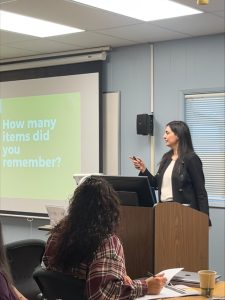
Q: Your upcoming session at LEO11, “Brain Power for K–12 Interpreters,” promises to be both fun and practical. Can you give us a sneak peek into what attendees can expect to learn?
A: I am excited to present at LEO11! While the code of ethics and standards of practice are important topics that often feel rigid and serious, I plan to take a creative and imaginative approach to memorizing them. I encourage all interpreters to come with a childlike mindset, filled with curiosity and a desire to learn.