
 With a career grounded in healthcare and crisis response, Rosemary brings a rare combination of grit, empathy, and operational insight to the field of language access. She’s spent the last 15+ years building a robust, system-wide Interpreter Services program at Covenant Health, ensuring patients across hospitals and care settings are heard, supported, and safe.
In this Q&A, Rosemary shares the lessons she’s learned from launching services under a DOJ decree, driving system-wide change, and bringing care directly to underserved communities. She also opens up about the mindset that sustains her work, and how competitive bodybuilding became her personal sanctuary.
Q: What inspired you to build a career in language access, and what continues to drive your work today?
A: Throughout my life, I’ve always been drawn to working with people. Through those interactions, I came to understand just how vital communication access is—whether someone has a disability or speaks a language other than English.
 My background is rooted in healthcare, from working in group homes with individuals with various disabilities to serving as a firefighter/EMT. In both roles, I encountered people with diverse communication needs, often in moments of crisis. I quickly learned that in many of those situations, clear communication wasn’t just helpful—it was a matter of life or death.
Those experiences solidified my commitment to language access. Today, what continues to drive my work is the belief that everyone deserves to be heard, understood, and treated with dignity, especially when their health and well-being are on the line.
Q: Covenant Health spans multiple hospitals and care settings. What are some of the most effective strategies you’ve implemented to ensure consistent, high-quality language access across such a large system?
A: I’ve learned many lessons over the years, and I’m extremely proud of the robust language access services our healthcare system offers. What makes our program successful is our focus on making interpreter services easy to access and seamlessly integrated into care.
Every department has its own video remote interpreting device—some have multiple, based on volume. This eliminates the need for clinical staff to search for devices or leave their units to sign one out, which saves valuable time and reduces stress in fast-paced environments.
We’ve also integrated interpreter screening directly into our EMR system. Registration staff can identify patients who need an interpreter at the very beginning of their visit. That information comes directly to our department, where we assign the appropriate interpreter modality and document it in the EMR. This takes the guesswork out of the process for staff and ensures continuity of care.
Interpreter Services is also a key part of new hire orientation. Every new employee learns about the importance of language access and how to use our services from day one. Ongoing refresher training is just as important—we often get creative by rounding on busy patient floors, joining department huddles, and attending staff meetings to keep the information fresh and accessible.
In addition, we continuously promote our services through bulletin boards, the hospital intranet, and other internal communications. We want our presence to be visible and top-of-mind, because at the end of the day, you can’t treat a patient effectively if you can’t communicate with them.
Q: You were instrumental in building an Interpreter Services Department from the ground up. What were some of the biggest challenges you faced, and what helped you overcome them?
A: I was originally hired following a lawsuit, during a time when the hospital was under a strict decree from the Department of Justice (DOJ). The mandate came with an aggressive timeline: all clinical and non-clinical staff, including travelers and contractors, had to be trained on language access, and I was responsible for tracking attendance and submitting signed documentation to the DOJ. On top of that, the training had to be at least one hour long, and I had to develop comprehensive policies and procedures to support patients who spoke—or signed—languages other than English.
At the time, I was new to the role and had no predecessor to turn to for guidance. Interpreter Services wasn’t centralized, and the work ahead of me was immense. One of the biggest hurdles was the lack of data. Our EMR wasn’t set up to capture or pull language needs, so I had no baseline to identify gaps or measure impact. I had to do a lot of creative problem-solving and, frankly, a lot of learning on the fly.
 Introducing Video Remote Interpreting (VRI) added another layer of complexity. Fifteen years ago, VRI was still in its infancy. Connect times were unreliable, and our IT infrastructure wasn’t equipped to handle the bandwidth it required. This led to frustrating experiences for both staff and patients, and it took significant effort to troubleshoot those early issues.
What helped me overcome these challenges was perseverance, flexibility, and relationship-building. I learned very quickly the value of strong partnerships—especially with our IT department. They became essential allies in making sure the technology worked reliably and consistently. Little by little, through data tracking, staff education, and a commitment to quality, we laid the foundation for what is now a robust, system-wide Interpreter Services program that I’m incredibly proud of.
Q: What advice would you give to healthcare systems just beginning to formalize their language access programs? Where should they start, and what pitfalls should they avoid?
A: Gain allies—this is absolutely key. You need legal, risk management, patient experience, IT, and leadership in your corner. If you can align your work with your hospital’s mission and strategic plan, do it. When your efforts are supported by colleagues who understand the importance of language access, it becomes much easier to clear hurdles and make lasting progress.
One of the most effective things I’ve learned is to speak the language of your clinical teams. Frame your conversations around what matters most to them—patient safety, quality of care, and patient experience. When you position interpreter services as essential to those outcomes, it resonates.
Also, focus on education. Help staff understand why working with qualified interpreters matters. Share research that shows how interpreter use reduces readmissions, medical misunderstandings, and misdiagnoses. That’s how you build buy-in and long-term compliance—by showing that language access isn’t just a legal requirement, but a vital part of safe, equitable care.
Q: In your experience, what are the most common misconceptions healthcare leaders have about language access, and how do you help shift those perspectives?
A: One of the most persistent misconceptions I’ve encountered—both early on and still today—is the idea that AI-generated translation tools, like Google Translate, are “good enough.” They may seem convenient and fast, but in a healthcare setting, they can be highly inaccurate and potentially harmful. I’ve spent a lot of time educating staff about the risks of relying on these tools for clinical communication or patient-facing materials.
Another challenge is the perception that professional translation services are too costly or slow. It’s true that having medical records or forms translated by qualified professionals can be expensive and isn’t always immediately available. That can make AI tools feel tempting. But the risk simply isn’t worth it.
For years, we’ve had clear procedures in place for submitting translation requests, and those processes are built into our system policies. What’s helped shift perspectives is not just education, but making the process easy to access. We also work strategically to reduce unnecessary costs—for example, our qualified interpreters often collaborate with clinical teams and patients to identify which forms actually need translation. That way, we’re using resources wisely while still prioritizing safety and accuracy.
Ultimately, the more we help healthcare leaders understand that language access is directly tied to patient safety and quality of care—not just compliance—the more support we earn.
Q: What advice would you give to healthcare organizations trying to strengthen their language access programs today?
A: Make language access a system-wide priority—not just a checkbox for compliance, but a commitment to equity, safety, and patient-centered care. That shift in mindset makes all the difference.
Start by assessing your current workflows and identifying where patients might be falling through the cracks. One of the most effective strategies is to work closely with your quality and risk departments to perform regular audits. Share those audit findings with teams along with targeted education on how to improve interpreter utilization and compliance. If your organization is accredited by DNV or The Joint Commission, tie those findings back to accreditation standards to reinforce the importance of working with qualified interpreters and documenting properly.
Compare your audit data year over year to highlight progress and identify trends. These insights can help you partner with clinical teams to uncover and address barriers that may be preventing staff from following the correct processes.
Also, don’t underestimate the value of engaging both clinical and non-clinical staff when building or refining your interpreter services program. Ask them what’s working, where the gaps are, and what support they need. Their feedback—and their buy-in—are essential to your program’s long-term success.
Finally, make it easy. The more seamless and accessible your language access tools are, the more likely staff will be to use them. When interpreter services are visible, supported, and integrated into daily operations, they become a natural part of delivering safe, high-quality care.
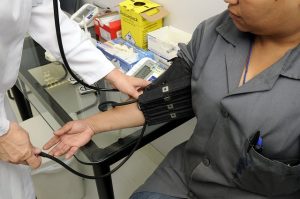 Q: Your work with the Mobile Health Clinic brings language services directly to underserved communities. What unexpected challenges or moments of impact have stood out to you in this role?
A: I wear many hats, and helping launch the Mobile Health Clinic was both new and exciting. While I didn’t have much experience with mobile healthcare specifically, my background as a firefighter/EMT gave me insight into the needs of diverse communities. From the beginning, I saw so much potential for growth and impact with this service line.
Like any new program, there were growing pains. One of the first challenges was figuring out what the community truly needed. And with underserved populations, building trust and rapport wasn’t optional—it was essential. You can offer the most comprehensive services with the best of intentions, but if the communities you’re trying to serve don’t know you, your organization, or what you stand for, the program won’t succeed.
So, we invested a lot of time in simply showing up—consistently. We built a regular schedule so people could come to rely on our presence. We partnered with trusted community organizations and engaged in genuine, low-pressure conversations. Over time, people started to recognize our faces, learn our names, and peek into the clinic to see what we were all about. Eventually, someone became our first patient. Then they told a friend, and that friend came too. And that’s how it grew—slowly, organically, and with a lot of patience.
What’s been truly rewarding is seeing how these relationships turn into access. To make our space even more welcoming, we prioritized having health information available in multiple languages, used VRI to meet communication needs, and made sure the visual branding on our mobile unit reflected the diversity of the community we serve.
The impact is real, and while the work is ongoing, the trust we’ve built—and the lives we’ve touched—make every challenge worth it. Data points help us tell the story, but the real proof is in the people who keep coming back.
Q: What is your favorite place in the world?
 A: The gym. Believe it or not, I’m a bonafide gym rat. I’ve been lifting competitively for several years, and about three years ago, I began competing in women’s bodybuilding—and even earned my pro card. My local gym is like my church. The people I see every morning are my community. I look forward to going each day, saying hello to the familiar, dedicated faces, and carving out that time for myself.
The gym is my “me time”—a space where I can focus on something I’m passionate about, push myself, and let go of stress. It grounds me and makes me a better person in every area of my life.