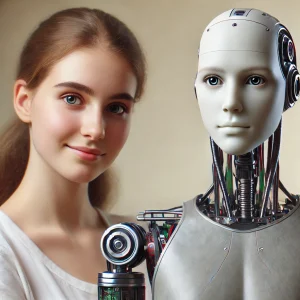
 As technology continues to advance, artificial intelligence (AI) has become a significant force across many industries, including interpreting. With AI-driven tools offering real-time translation and language processing, some may wonder if human interpreters are becoming obsolete. However, despite these technological strides, the human at the core remains essential in interpreting — especially in contexts where understanding, empathy, and cultural nuance are paramount.
 LLMs, such as GPT-4 and BERT, represent the cutting edge of AI language processing. These models are trained on vast amounts of text data and can generate human-like language outputs. They are often used in applications like chatbots, customer service, and even some translation tasks. However, despite their advanced capabilities, they are not without limitations.
- Contextual understanding: LLMs are powerful tools, but they often rely on statistical patterns rather than true understanding. For example, in legal settings, LLMs might struggle to differentiate between legal jargon and everyday language, leading to potential inaccuracies in interpretation. A human interpreter, on the other hand, understands the context and can adjust to ensure that the meaning is conveyed accurately.
- Cultural sensitivity: While LLMs can translate language, they lack the cultural knowledge and sensitivity that human interpreters possess. For instance, an LLM might translate a phrase literally, missing the cultural connotations that could alter the meaning entirely. Among many important fields this is particularly problematic in healthcare, where cultural nuances can affect patient care and communication.
- Emotional intelligence: LLMs can process and generate text based on patterns in data, but they do not possess emotional intelligence. In situations where empathy and understanding are crucial, such as counseling or social services, a human interpreter can pick up on emotional cues and adjust their tone accordingly — something that an LLM simply cannot do.
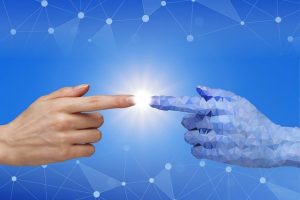 While AI has its place in the interpreting field, it should be viewed as a tool to complement human skills, not replace them. AI can assist with routine tasks, such as managing terminology or providing quick preset translations in low-risk situations, such as appointment reminders. However, when it comes to the nuanced, high stakes work that interpreters do every day, the human touch is and will remain irreplaceable.
By leveraging technology to handle the more straightforward processes of interpreting, professional interpreters can focus on improviding their skills and adding the most value in areas — those that require empathy, cultural understanding, and the ability to manage complex interpersonal dynamics.
In a digital world where AI continues to evolve, the need for human interpreters remains strong. The unique combination of cultural competence, empathy, adaptability, and ethical decision-making that interpreters bring to their work is something that no machine can replicate. As technology advances, it’s more important than ever for interpreters to embrace their irreplaceable role and continue to stand out in a world that still needs a human touch – possibly now more than ever.
If you’re interested in exploring how interpreters can continue to stand out in the age of AI, don’t miss our upcoming webinar on September 19th, titled “Irreplaceable Interpreters: Standing Out in the Age of AI”. Hosted by Andrea Henry and moderated by Bruce Adelson, this session will dive into the intersection of AI and interpreting, offering practical strategies to ensure that your skills remain essential in a digital world.